Brian Green, also known as Psychochild, has an article up at Gamasutra called "Legitimacy for Game Developers". Brian identifies three kinds of legitimacy
Financial Legitimacy means making money and being a viable medium for business. Older media often do not have to worry about this type of legitimacy; for example, people rarely publish poetry with the hope of making a large profit -- it is often done as an act of prestige. Many new media, such as computer games, prove themselves in this area first and that helps gain other forms of legitimacy.
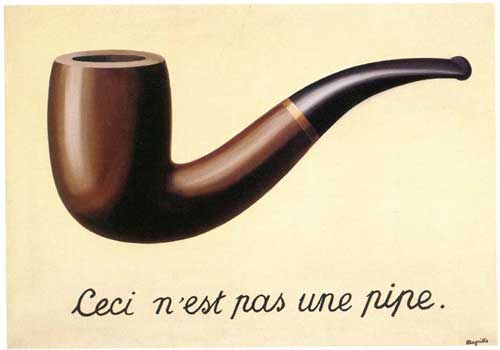
Artistic Legitimacy is how the people working in the medium see it. For example, how do you see your job as a game developer? Do you think you are making art? Do you think you're making mere entertainment?
Do you do games until you can break into a "real" creative medium like movies? Do just collect a paycheck? Do you work in games because of the creative opportunities? The answer to those questions influence how legitimate games are as a medium.
Cultural Legitimacy indicates how much society respects the medium. Is the medium worthwhile to spend time on, like reading books, or is it considered a waste of time? In many western societies, we respect the concept of "freedom of speech", where we allow people the right to express themselves freely.
Many attacks on creative media have been halted because of the protections afforded by this freedom. Book burnings are often seen as something abhorrent, an attack on the legitimate medium of writing. Yet, some people don't see the same problem with limiting the sale of video games to the point of harm to the medium. This is usually influenced by the other two forms of legitimacy.
I'm not really a big fan of capital-A "Art". It's kind of too self-absorbed. Rembrandt cranked out most of his paintings for rich Dutch merchants who used them as decorations at their lavish parties, more like flower arrangements than precious treasures.
On the other hand, games are a creative work that is meant to engage other people, and as such, it's art. I don't think Brian and I disagree on this point.
Ok, so art has this responsibility to dig up real emotion, to come from pain, to be authentic, to be personal. Robert Frost said, "no surprise for the author, no surprise for the reader." In other words, you can't fake it.
Yesterdays post on blacks on MMO's was a jumble. I apologize. I'm trying to figure out how an MMO can address some of the things about race that I'm currently thinking about.
One of the problems that MMO's have is in projecting character. You don't have much to work with: a few voiceovers, some text that lots of people just click through and don't read, and the character art work. The things that LOTRO has done with the "escort quest" help quite a bit, as the players accompany a character while she or he does stuff. More character and more story there. But it's tough. Player characters are meant to be the central figures in tabletop RPG's, and MMO's have a strong family lineage from them.
The most important stories to MMO RPG's are stories about your character. "I got my epic" is a favorite story, or "I got my Mythical" or sometimes "I made this really dumb mistake that got me wiped multiple times" can be told for, umm, comic relief.
That being the case, if a game dev tries to do the sorts of things to the players that writers routinely do to their characters, the players may nat take it well. "Hey, you, Brian Piccolo! You're going to get cancer and DIE!!!"
That's a good story, but only from the outside. That plot (Google "Brian's Song" for a blast from the past) wouldn't work in an MMO.
If you think about the film (or the book) "The Return of the King" structurally, it's all about death. Facing it, overcoming fear of it, and accepting it, and dying. How can one portray that in an MMO? You can't permanently kill players, and it's hard to portray characters that die, since in fifteen minutes, they will spring back to life so that the next group of heroes can experience their deaths.
I think it's possible to make an MMO with a story arc that involves the death of a favored NPC, but it would depend heavily on instancing and quest progression. As entertainment, it's a risk as well, since Americans at least don't seem all that fond of tragedy. We like our happy endings. But still, things like the success of Dr Horribles Singalong Blog, and for that matter, The Lord of the Rings make me think that maybe a little tragedy wouldn't be so terrible.
I haven't played WoW's latest expansion, but what tidbits I've heard make me think that Blizzard is trying to push the medium in this direction.
In EQ2, there's a quest line in TSO that took my character undercover among the boarfiends, where I didsovered a plot to kill the current Chief of the boarfiends. Since the new regime was likely to be a lot more hostile to us and our interests, we undertook to warn the Chief, but he ignored us, so we were given the task of assassinating the interloper. We fight him, but he runs away before we can kill him. We like to the robot who sent us on the mission, saying that he's been dealt with. We ended up adopting a baby pig which we were asked to destroy, since it's no longer useful.
I like this kind of bittersweet writing. It's done by someone who does take the art that they are doing seriously, as well as the imperative to entertain and engage.
Really, I think this quest line is a good direction.
Labels: mmo as art, mmo psychology